
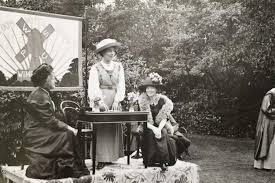
In late 1908, the Wimbledon WSPU utilised Wimbledon Common as a primary site for public engagement and education. Rose Lamartine Yates emerged as a principal speaker at these gatherings beginning in mid-1909. Her speeches were exceptionally well-received, often drawing large, appreciative crowds and fostering local interest in the “Votes for Women” campaign. By 1910, these meetings were a weekly occurrence, held every Sunday regardless of weather conditions.
Escalation of Conflict and Violence
By 1913, the political climate had shifted, and the demonstrations on the Common became increasingly volatile. Following the withdrawal of the Franchise Bill, militant actions by the WSPU, including raids on local golf courses, provoked a significant backlash from the public. Examples of these challenges included a number of physical assaults. On March 8, 1913, reports detailed scenes of women being “brutally assaulted” by an angry mob. The speaker’s platform was rushed, and several women, including Rose Lamartine Yates, were badly bruised or injured. Despite these attacks, Lamartine Yates and the Wimbledon WSPU remained defiant, continuing their meetings on the Common to vindicate their right to free speech. Even after the head of the Metropolitan Police attempted to ban suffragette meetings in public spaces due to disorder, Yates ignored the prohibition. One of the most significant meetings in April 1913 saw Yates addressing a crowd estimated at 10,000 people, successfully vindicating their right to free speech in the face of government opposition.
Impact on the Wimbledon WSPU
The demonstrations on the Common had a multifaceted impact on the Wimbledon WSPU:
Focus: The visibility of these meetings was instrumental in making Wimbledon one of the best-supported WSPU branches, significantly increasing its turnover and membership.
Target for Hostility: As militant tactics nationally shifted towards arson and property damage in 1912–1913, the Common meetings became flashpoints for violence.
Escalation of Local Militancy: The hostility faced on the Common served to radicalise the branch. Following local assaults, the Wimbledon WSPU shifted from national lobbying to local militant acts, including raiding local golf greens and an attempted arson at the All-England Lawn Tennis Club.
Legal Challenges: Local disorder on the Common informed national policy; the clashes in Wimbledon were used by authorities to advocate for a broader ban on suffragette meetings in public parks across London.
Summary
In summary, the Wimbledon Common demonstrations transformed the local WSPU from a small committee into a powerful, autonomous political force. Under Rose Lamartine Yates’ leadership, the Common served as both a recruitment tool and a battlefield for free speech, ultimately defining the branch’s identity through its resilience against public and state opposition.
Sources: Alexandra Hughes-Johnson’s doctoral thesis (2017) provides a detailed account of the Women’s Social and Political Union (WSPU) in Wimbledon, highlighting the significance of Wimbledon Common as a primary site for activism and the central leadership of Rose Lamartine Yates.
